Guides
Reviewing junk removal services: strengths, gaps and a verdict
Six national junk removal services reviewed by what they take, what they charge for, and where each one leaves a gap a local hauler can fill.
What to take away
- The six junk removal services below split into two camps1-800-GOT-JUNK? and College Hunks Hauling Junk sell a national brand and a franchise price book, and both quote by truck volume rather than weight.
- Junk King and Two Men and a Truck differ on laborJunk King prices the load, Two Men bills the crew by the hour.
- Bagster and LoadUp sell a container or a dispatch, not a crew. They are the comparison a customer makes before calling a local hauler.
- None of the six will touch paint, tires, refrigerant appliances or asbestos. That exclusion is your opening.
- Test each service below against your own disposal cost and drive time. The verdict rests on whether the gap it leaves is one you can staff.
The six services, reviewed
These six companies sell different things. Five sell a national phone number and a trained crew. Bagster sells a bag; LoadUp sells a booking. Prices are typical U.S. ranges as of 2026, quoted by volume, by hour or by item, and they move with the local market.
Six Junk Removal Models Compared
1-800-GOT-JUNK?
- Model
- Franchise trucks
- Pricing
- Truck volume
- Best for
- Same-day loads
- The gap
- Premium price
College Hunks
- Model
- Franchise crews
- Pricing
- Volume + labor
- Best for
- Residential clearouts
- The gap
- Varies by franchisee
Junk King
- Model
- Dump trailers
- Pricing
- Volume + recycling
- Best for
- Mixed metal loads
- The gap
- Limited rural coverage
Two Men and a Truck
- Model
- Moving-first
- Pricing
- Hourly crew
- Best for
- Labor-only jobs
- The gap
- Disposal billed extra
Model
- 1-800-GOT-JUNK?
- Franchise, uniform trucks
- College Hunks Hauling Junk
- Franchise, two-person crews
- Junk King
- Franchise, dump-trailer fleet
- Two Men and a Truck
- Franchise, moving-first
- Bagster
- Retail bag, third-party pickup
- LoadUp
- Dispatch marketplace
Pricing basis
- 1-800-GOT-JUNK?
- Volume in truck fractions
- College Hunks Hauling Junk
- Volume plus labor add-ons
- Junk King
- Volume, with recycling credit
- Two Men and a Truck
- Hourly crew rate
- Bagster
- Flat fee per bag
- LoadUp
- Per-item quoted online
Typical price, 2026
- 1-800-GOT-JUNK?
- $130 to $180 minimum; $450 to $650 half load
- College Hunks Hauling Junk
- $150 to $200 junk minimum; moving labor hourly
- Junk King
- $130 to $200 minimum pickup fee
- Two Men and a Truck
- $100 to $160 per hour, disposal extra
- Bagster
- Bag about $30 to $40; pickup $130 to $250
- LoadUp
- $100 to $200 per item, market-dependent
Best for
- 1-800-GOT-JUNK?
- Same-day single-item and partial loads
- College Hunks Hauling Junk
- Residential clearouts with a mover
- Junk King
- Mixed loads with metal and e-waste
- Two Men and a Truck
- Labor-only and heavy disassembly
- Bagster
- One-room declutters
- LoadUp
- Customers who want a number fast
The gap
- 1-800-GOT-JUNK?
- Premium price, no labor-only option
- College Hunks Hauling Junk
- Scheduling depth varies by franchisee
- Junk King
- Limited rural coverage
- Two Men and a Truck
- Disposal often billed separately
- Bagster
- Weight limit, no crew
- LoadUp
- Contractor quality varies by market
Read that table as a comparison of business models, not of quality. Each one answers a different question, which is why a customer can hold two of them in mind at once.
1-800-GOT-JUNK?: the brand that sets the price ceiling
This is the franchise most customers name first. It is also the reason a solo hauler can quote above the local average. The trucks are wrapped, the crews wear uniforms, and the call center books a two-hour arrival window.
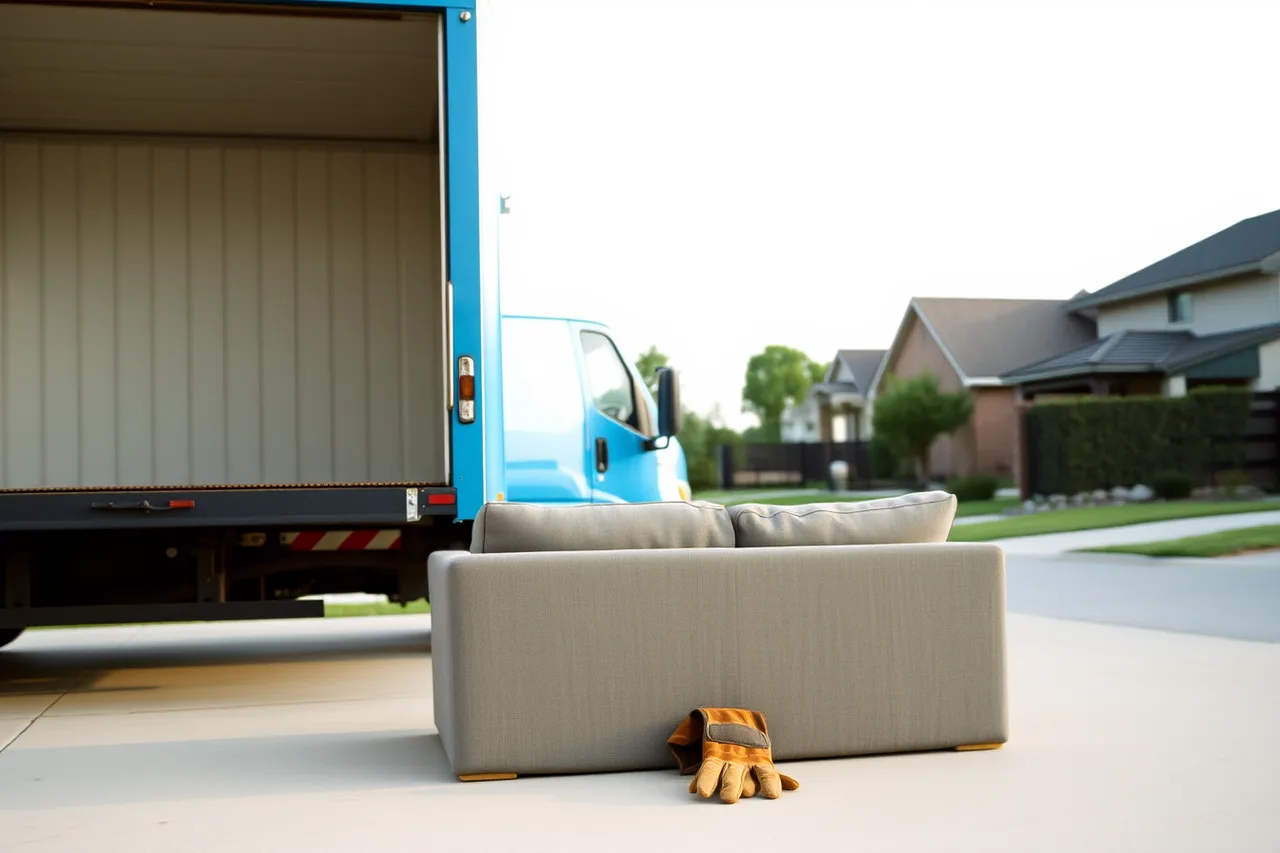
Pricing runs on truck volume: a single item, a quarter load, a half load, a full load. The crew quotes at the door after looking at the pile, so the customer gets a number in person rather than on the phone.
In most markets as of 2026, the minimum pickup runs about $130 to $180, a half load $450 to $650, and a full load $700 to $1,000. That is the ceiling your own quote gets measured against.
Strengths: national recognition, same-day and next-day slots in most metros, and a franchisee who has already solved the licensing and insurance questions in that state or province.
Gaps: the highest price in most markets, no labor-only work, and a job that needs a dump trailer rather than a box truck may be declined. A customer with one couch and a firm budget is a gap a local operator fills.
College Hunks Hauling Junk: clearouts with a moving arm
College Hunks runs two service lines under one brand: junk removal and moving. That combination matters for estate and tenant-turnover work, where the same crew can haul away what is left and move what is kept.
Crews typically work in pairs. Junk is priced by volume, with labor and packing billed as add-ons on the moving side. A junk-only minimum usually lands near $150 to $200 in most markets.
The franchise model means a customer in one city may get a different experience than a customer in another. The local franchisee's reviews matter more than the national ones.
Strengths: one call covers hauling and moving, which suits executors and property managers. Gaps: not every franchisee runs both lines, and the volume pricing still assumes driveway access.
Junk King: recycling as part of the pitch
Junk King built its model on dump trailers rather than box trucks. A crew can drop a trailer, fill it, and swap it out without a second trip.
The company markets its sorting and recycling rate. Metal, e-waste and cardboard are commonly separated before the tip.
Pricing is by volume, and some franchises advertise a minimum pickup fee, typically $130 to $200 in 2026. The recycling angle is real, but it is not a discount unless the local franchisee says so in writing.
Strengths: efficient on mixed loads with recoverable material, and trailers handle awkward items a box truck cannot. Gaps: coverage thins outside metros, and the minimum fee makes small jobs expensive.
Two Men and a Truck: the hourly crew
Two Men and a Truck is a moving company that added junk removal. That makes it the closest national comparison to labor-only work.
The crew arrives, the clock starts, and the customer pays for hours plus materials. Rates typically run $100 to $160 per hour for a two or three person crew in 2026, depending on the market.
That structure suits jobs where the customer supplies the container or the dumpster, or where the work is mostly disassembly: a playset, a shed, a hot tub surround. Disposal fees are frequently billed separately from the labor rate, so the quote a customer hears on the phone is not the total.
Strengths: transparent hourly billing and crews trained to move heavy items without damage. Gaps: no flat price, and a customer who wants one number will keep shopping.
Bagster and LoadUp: the two that are not crews
Waste Management's Bagster is a woven bag a homeowner buys at a hardware store. It retails around $30 to $40, the homeowner fills it, then schedules a pickup that typically costs $130 to $250 by market.
The flat fee covers collection, not labor, and the bag holds up to 3,300 pounds. A load of tile or dirt will exceed that limit.
LoadUp is a dispatch platform. A customer enters the items online, gets a quoted price, and a local contractor performs the work. Single-item pickups commonly quote $100 to $200, priced before anyone sees the pile.
Strengths: both give a customer a number without a site visit, which is exactly what a phone-shy buyer wants. Gaps: Bagster has no crew, and LoadUp's contractor quality varies by market. Both are the comparison a customer makes before calling a local hauler, so know their prices.
What none of them will take
Every service above excludes the same categories, because the disposal rules are the same for a franchise and a solo operator.
Paint, solvents, batteries, and fluorescent tubes go through separate programs. Tires, appliances holding refrigerant, and anything with a hazard pictogram also do. The EPA's overview of products with corrosive, toxic, ignitable or reactive ingredients describes the general categories.
Your state environmental agency and the facility receiving your loads decide what applies to you. Confirm with them before you advertise appliance or electronics removal.
What the reviews mean for your own menu
The six services above define the market's price ceiling and its service floor. A customer who has called two of them already knows roughly what a half load costs.
That knowledge cuts both ways. It makes a premium price defensible when your crew, truck and window match the franchise experience. It also makes a vague quote look worse, because the customer has a comparison in hand.
Two decisions follow. First, pick the gap you can staff: labor-only, restricted-stream handling, or rural coverage. Second, price against your own disposal cost and drive time rather than against the franchise number, which carries brand overhead you do not have.
Wages for the physical work underneath all of it can be sized against the Bureau of Labor Statistics' occupational employment and wage estimates by area. That gives a defensible floor before you add your own loading.
The verdict
For a customer in a metro who wants a couch gone today, 1-800-GOT-JUNK? wins on speed and charges the highest price for it. College Hunks wins an estate clearout that also needs a move.
Junk King wins a mixed load full of metal and e-waste, where the trailer and the sorting pay off. Two Men and a Truck wins the labor-only job with a dumpster already in the driveway.
Bagster wins the cheapest one-room declutter, provided the weight stays under the limit. LoadUp wins the buyer who wants a number online tonight and will accept a contractor they have never met.
For the operator, the verdict is narrower. The franchises own speed, branding and volume pricing. The open ground is labor-only work, restricted-stream handling, rural routes, and small loads that fall under a franchise minimum.
Advertising a comparison you invite
If your website names a competitor, the claim has to be accurate and current. The Federal Trade Commission's advertising guidance for small businesses sets out the general expectation for comparative claims.
Avoid three claims in this trade. Never state where material ends up, since a recycling claim you cannot evidence is a claim you should not make. Never quote a price that quietly assumes curbside access. And never promise same-day service your schedule cannot honor.
Record enough per job to know your own numbers before you publish anyone else's. The IRS lists what records a business is expected to keep, and that same discipline gives you a per-job cost you can compare against a quoted franchise price.
Owners still deciding where to operate should read the startup and market guide. The housing stock and commercial base around you decide which of these six services have customers at all.
Common questions
Are these the only junk removal services worth comparing?
No. They are the six a customer is most likely to find first, because five of them buy national advertising. Regional haulers, municipal bulky-item pickup and independent dumpster renters fill the rest of the market.
Why does every one of them price by volume instead of weight?
Because the customer cannot picture a ton but can picture a truck. Weight is how the transfer station bills you, so your own costing has to convert between the two. Construction debris, tile and dirt break that conversion and belong in their own service.
Should I copy a franchise price book?
Use it as a ceiling, not a template. The franchise number carries brand overhead, franchise fees and a call center you are not paying for. Price against your disposal cost, labor hours, fuel and drive time, then check where you land against the local franchise quote.
What if a customer asks why I am cheaper?
Say what is different: no call center, the owner on the truck, a narrower service area. A price gap with no explanation reads as a risk. A price gap with a reason reads as a choice.