Guides
Junk removal equipment makers worth knowing
Real junk removal equipment brands, from truck bodies to hand dollies, and what each specific piece of gear is actually for on a hauling crew.
What to take away
Junk removal equipment makers split into body builders, chassis brands, trailer makers and hand-tool suppliers. Each one sells a different part of the truck.
- Truck body builders and chassis makers are separate purchases. Switch-N-Go, Galbreath and Ampliroll build the body. Ford, Isuzu, Chevrolet and Ram build the chassis.
- Switch-N-Go detachable container systems and hook-lift systems from Ampliroll or Galbreath cost more up front and cut turnaround time on multi-stop days.
- Hand tools are the cheapest line on the truck. Cosco, Magliner and Harper dollies are the ones crews keep.
- Ask any dealer for the payload rating printed on the vehicle, not the volume rating in the brochure.
- Budget tier narrows the brand. Crysteel and Rugby dump bodies sit at the value end, Knapheide and Reading in the middle, and hook lifts from Ampliroll, Stellar and Palfinger above both.
Truck bodies and dump systems
The body is the part your crew touches every job. Switch-N-Go builds detachable container systems in its S-Series and E-Series, where the number in the model marks the capacity class. One chassis then carries several bodies. That suits crews running drop-off and pick-up on the same day.
These systems sell through dealers rather than at list price. A detachable hoist typically runs $10,000 to $16,000 as of 2026, and each extra body is priced on its own, so the total depends on how many bodies you rotate.
Ampliroll sells its hook lifts in the AL series, numbered by lifting capacity, and Stellar builds the Shuttle line. Hook-lift systems from Ampliroll, Stellar Industries, Palfinger and Hiab Multilift work on the same principle: leave the container, take the chassis.
Galbreath, part of Wastequip, builds both hook-lift and cable hoist bodies and sells through a dealer network. A new hook-lift hoist typically runs $18,000 to $35,000 installed in 2026, and containers add roughly $3,000 to $7,000 each. Quotes vary by region and by chassis.
Durability and parts availability split along brand lines. Galbreath and Stellar hoists are the ones rebuilders know best, with wear parts sold through Wastequip and Stellar dealers. Palfinger and Hiab Multilift build lighter hoists for high-cycle work, and their parts reach most metro areas first.
Ampliroll has a long service record, but parts for older units can take longer outside big cities.
A hook-lift truck costs more than a fixed dump body. The math only works if you are turning containers often enough to bill for the extra trips.
For a straight dump body, makers include Crysteel, Rugby, Knapheide and Reading. Crysteel builds the Eliminator line, and Rugby, Knapheide and Reading sell through dealer networks.
A new steel dump body with hoist in the 10 to 14 foot class typically prices between $8,000 and $16,000 before installation, as of 2026. The finished number depends on hoist capacity and the chassis it bolts to.
Reading the spec sheet matters more than the badge. Payload rating, empty weight as configured, and tailgate height decide whether a dense load is legal and whether your crew can still lift at job six. That reasoning is worked through in the equipment and setup guide.
Chassis and cab
Most junk removal trucks are built on a commercial chassis from Ford, Isuzu, Chevrolet or Ram. Mitsubishi Fuso also sells the FE series in this class.
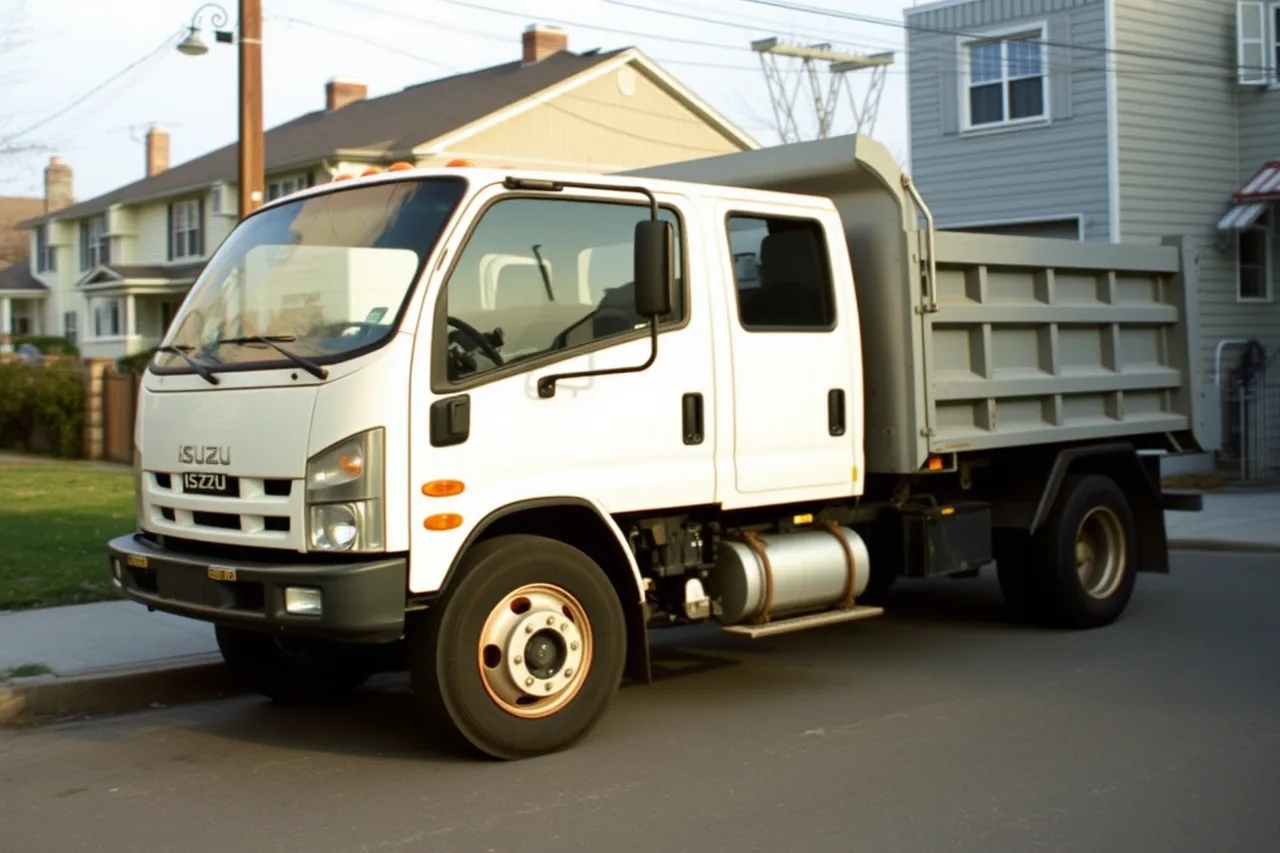
Isuzu NPR and NQR cabovers are common in this trade for their tight turning radius on residential streets. Ford's F-450 and F-550 chassis are widely serviced and widely understood by independent shops. Ram's 4500 and 5500 chassis compete in the same class, and Chevrolet's Silverado 4500HD and 5500HD do too.
The question at the counter is not which badge is best. It is which of these has a service point within your driving radius that has worked on your exact configuration. A chassis nobody local has seen is a chassis nobody local can fix quickly.
Trailers
Dump trailers from PJ Trailers, Big Tex and Sure-Trac are the usual entry point for a crew running a pickup or a smaller chassis. Load Trail and Diamond C build in the same class. All sell through dealers and publish gross vehicle weight ratings you can check against your tow vehicle's rating.
A 14-foot, 14,000-pound gross dump trailer is a common starting size. New examples typically run $8,000 to $14,000 as of 2026, depending on brand, brakes and gate design. The right number depends on what you haul and what your truck can legally pull.
Trailer brakes, tire load range and ramp or gate design decide whether the trailer survives a season. Buy the trailer that matches your truck's rating, not the one on the lot with the best paint.
Hand tools and dollies
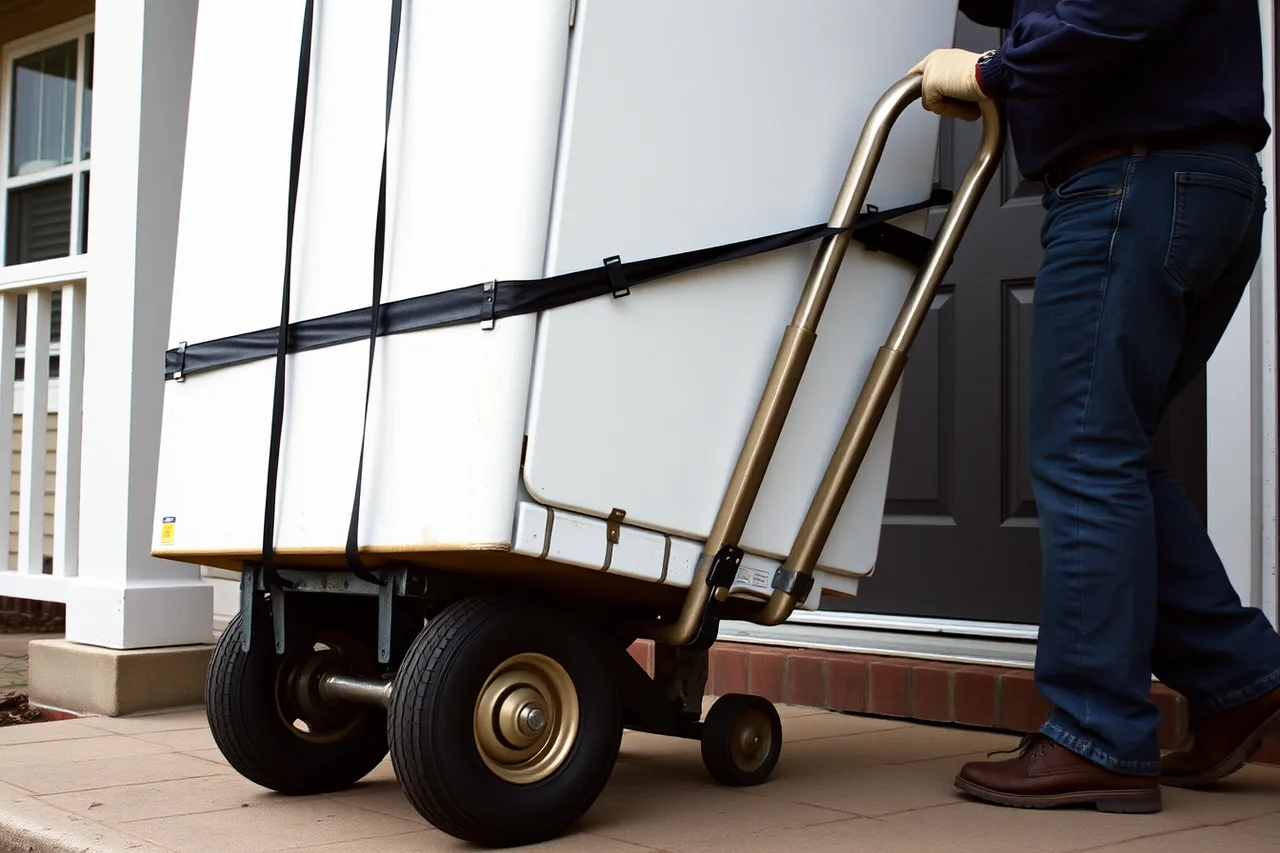
Appliance dollies from Cosco and Magliner are the workhorses for fridges, washers and dryers. Magliner also sells the Gemini, a convertible hand truck that switches between two-wheel and four-wheel use. Harper makes heavy-duty dollies rated for appliance and furniture work.
For mattresses, a mattress bag and a two-person carry beats any dolly. U-Haul sells mattress bags individually, often for under $10. Uline sells them in cases, and both suppliers stock them cheaply enough that running out mid-job is a planning failure, not a supply problem.
Furniture dollies, strap sets and moving blankets round out the kit. The test for any of it is whether the crew still reaches for it in month six. That is a question you answer by asking them, not by reading a specification.
Securement and safety gear
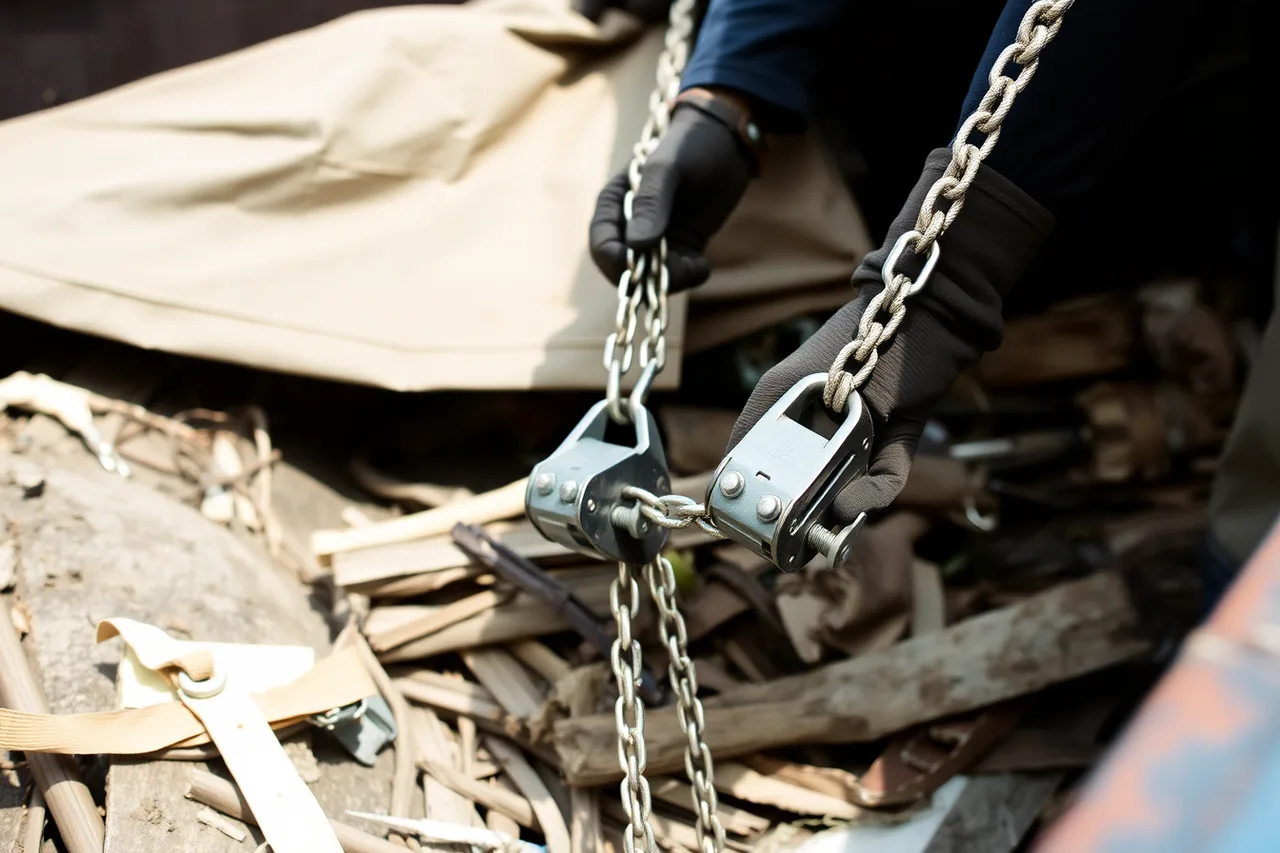
Tie-down straps, ratchet binders, chains and tarps keep a load on the truck. Ancra, Keeper and Mac's Custom Tie-Downs make straps and binders for this work.
The Federal Motor Carrier Safety Administration summarizes general performance expectations for cargo securement, including container provisions, in its cargo securement rules. Which rules apply to your vehicle class is a question for that agency and your state.
A tarp that needs someone standing on a load is a tarp that gets skipped on a wet afternoon. Buy a tarp system one person can deploy from the ground. Aero Industries, Donovan and Roll-Rite make tarp systems for dump bodies and trailers.
Gloves, safety glasses, steel-toe boots and high-visibility vests are not optional. OSHA's guidance on finding and fixing hazards before an injury is the place to start, not a supplier's catalog.
What the gear cannot carry
Paint, solvents, batteries, fluorescent tubes, tires and refrigerant-bearing appliances need separate handling. The EPA's overview of household hazardous waste describes them generally. No truck configuration changes that answer.
Matching gear to your operation
What to look at
- First truck, single crew
- Used Isuzu NPR or Ford F-450 with a dump body
- Adding a second truck
- Same chassis family as truck one
- Multi-stop drop and swap
- Switch-N-Go or hook-lift system
- Tight residential streets
- Cabover chassis
- Heavy appliance work
- Magliner or Cosco dolly, mattress bags
- Long rural routes
- Ford F-550 or Ram 5500 dump body
- Cargo securement
- Ancra or Keeper straps, ground-deploy tarp
- Trailer hauling
- PJ Trailers or Big Tex dump trailer
What to avoid
- First truck, single crew
- A new hook-lift you cannot fill
- Adding a second truck
- A second brand with a different parts chain
- Multi-stop drop and swap
- A fixed body and two trips per job
- Tight residential streets
- Long-wheelbase conventional
- Heavy appliance work
- Cheap dollies the crew abandons
- Long rural routes
- A light-duty chassis loaded past its rating
- Cargo securement
- A tarp that needs someone on the load
- Trailer hauling
- A trailer over your truck's rating
The pattern is the same in every row. Buy the gear that matches the work you actually do.
Buying new or used
Used equipment is where most small operators start, and the math is different from new. A used truck with a documented service history is a known quantity. A used truck with no history is a body you are pricing blind.
The comparison is worked through in the new against used cost guide. The short version: a five-year-old example of the exact setup you want tells you the real depreciation curve, not an assumed one.
Before you buy anything, walk the yard and ask what fails first. Hydraulic seals, gate hinges, tarp mechanisms and tires are the usual answers. Parts lead time for those items decides whether a breakdown costs a day or two weeks.
Bringing a crew onto the gear
Equipment only pays back if the crew uses it correctly. That means showing them why the Gemini dolly goes on the truck before the first appliance job. It means showing them why the tarp deploys from the ground before the truck moves, and why the mattress bag is not optional on a two-person carry.
Teach a crew why a specific item exists, and they reach for it in month six. That onboarding matter is covered in the hiring and training guide, while the day one buying list is in the equipment checklist for new owners.
Whether any of this is the right spend depends on the demand where you operate, which is the subject of the article on choosing a market.
Common questions
Are some manufacturers genuinely better?
Yes, for a given duty cycle in a given region. A Switch-N-Go body that works in a dense suburban market may be wrong for a rural operation with long drive times. A Galbreath cable hoist suits different work than a PJ dump trailer. Match the gear to your routes, not to a national ranking.
Is the most expensive option usually the most durable?
Sometimes, and sometimes you are paying for a duty cycle heavier than yours. A five-year-old example of the same setup tells you what the market thinks after depreciation, which is a better signal than the sticker.
Should I buy the same brand as the busiest company in town?
Copy the specification, not the badge. Find out what payload and unload method they run, then ask your own dealer about service coverage and parts lead time locally.
What about buying at auction?
Only if you can inspect it and can absorb a week off the road. A body with no service history is a body you are pricing blind, and auction gear often needs work before it earns.