Guides
Junk Removal Marketing: Three Sources of Customer Leads
Junk removal marketing relies on local search, referrals, and recurring commercial accounts; availability and clear service details help convert demand.
What to take away
- Almost every junk removal job starts with a deadline. That single fact tells you which channels matter and which are decoration.
- Junk removal marketing relies on three channelslocal search for the person with a problem today, referral partners who see the need before the customer does, and recurring commercial accounts.
- Being reachable beats being clever. In a deadline trade, an answered phone converts better than any campaign.
- What you say has rules. Price claims and review practices are both areas where enthusiasm turns into a problem.
Who is actually calling
Picture the caller rather than the demographic.
A house has sold and completion is Friday. A tenant left and the unit shows on Monday. A parent has died and the family has a weekend. A renovation has finished and the contractor will not take the debris. A garage has finally become intolerable and today is the day.
Four of those five have a date attached. That is the defining feature of demand in this trade, and it explains why availability sells better than price and why a missed call is a lost job rather than a delayed one.
The three channels that carry the trade
Who it catches
- Local search and map listings
- The person with a deadline today
- Referral partners
- The customer before they know they need you
- Recurring commercial accounts
- Property managers, contractors, retail
What it needs from you
- Local search and map listings
- An accurate listing, real photos, an answered phone
- Referral partners
- In-person contact and total reliability
- Recurring commercial accounts
- Paperwork, scheduling reliability, patience
How fast it pays
- Local search and map listings
- Fast, and it is the first thing to get right
- Referral partners
- Slow to build, durable once built
- Recurring commercial accounts
- Slowest, and the steadiest revenue you will have
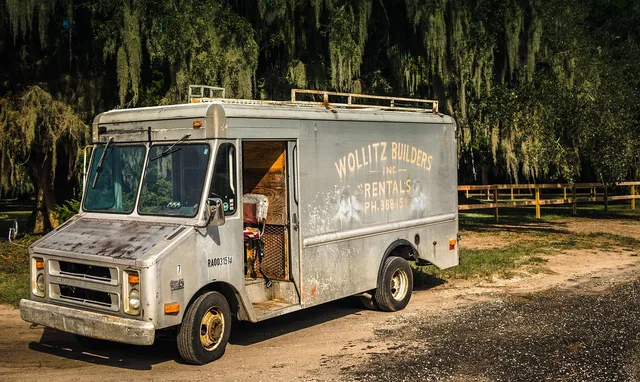
Everything else, including paid advertising and social posting, works or fails depending on whether these three are in place first. A wrap on a truck is not a channel; it is a reminder for people who already know you exist.
Three channels that carry the trade
Local search and map listings
- Who it catches
- Deadline today
- What it needs
- Accurate listing, real photos
- How fast it pays
- Fast
Referral partners
- Who it catches
- Before they know
- What it needs
- In-person contact, reliability
- How fast it pays
- Slow to build
Recurring commercial accounts
- Who it catches
- Property managers, contractors
- What it needs
- Paperwork, scheduling, patience
- How fast it pays
- Slowest, steadiest
Local search, briefly
This is the channel that catches the deadline caller. The work is mostly unglamorous accuracy: correct hours, correct service area, real photos of your own crew and trucks, and a description that states exactly what you take and what you refuse.
Start with Google Business Profile: Google lets business owners create and verify their business data through Google Business Profile. Then claim other relevant profiles, such as Bing Places for Business, Apple Business Connect, Yelp, and Nextdoor. Each platform publishes its own guidance on what improves a listing, and reading the platform's own documentation beats acting on advice from anyone selling you a service.
Two things convert far better than a higher position. Photographs of actual jobs, before and after, because this is a visual service people are nervous about. And a clear statement of what you cannot take, which saves everybody a wasted call.
Referral partners
The people who see the need before the customer does are the most valuable relationships in this trade.
Real estate agents preparing a listing. Property managers turning a unit. Estate sale organizers and senior move managers. Storage facility staff watching a unit go unpaid. General contractors with debris. Cleaning companies who arrive before you do.
Approach them in person, once, with something concrete: what you take, what you refuse, how fast you can come, and a direct number. Then be reliable, because a referral partner is putting their own reputation on your crew and one bad job ends the relationship permanently.
The reliability that makes referrals possible comes from operations rather than from marketing, which is why the operations and workflow guide is upstream of this page.
Recurring commercial accounts
Recurring commercial accounts differ from a one-off referral: the customer may need cleanouts or removals repeatedly. Ask property managers about unit turnovers, contractors about post-project debris, and retailers about unwanted fixtures or other removal needs.
Before accepting repeat work, agree on accepted materials, access, service windows, the approval process, and invoicing. The channel works operationally when route timing, crew capacity, and disposal rules make each visit workable.
Reviews, handled properly
Reviews matter in a service people buy nervously, and they are also an area where operators create problems for themselves.
Review requests done properly
- Do not offer anything in exchange
- Do not filter who you ask
- Do not write or commission reviews
- Ask everybody at the same moment
- Ask at the end of the job
- Answer negative reviews calmly and specifically
Do not offer anything in exchange for a review, do not filter who you ask based on how happy they seem, and do not write or commission any. The Federal Trade Commission's guidance on soliciting and paying for online reviews sets out what is expected of a marketer here, and it is short enough to read once and follow. For the named standards, read the FTC Endorsement Guides, officially titled 16 CFR Part 255 – Guides Concerning the Use of Endorsements and Testimonials in Advertising, and the FTC's Consumer Reviews and Testimonials Rule. Customers can leave reviews on platforms such as Google or Yelp.
What does work is asking everybody, at the same moment, in the same way: at the end of the job, when the space is clear and the customer is standing in it. Answer negative reviews calmly and specifically, because the reply is read by the next twenty people rather than by the complainant.
The price you advertise
A headline price is a claim, and the conditions that make it achievable have to be clear enough that a reader understands them. The offer also has to be genuinely available. The Federal Trade Commission's Advertising and Marketing Basics guidance for small businesses covers the general expectation.
Pricing habits that lose the sale
- Load price excluding disposal, unstated
- Single-item price assuming curbside access
- Same-day promise no schedule can honor
- Publish a range with conditions attached
- Build packages with written scope
Three habits cause most of the trouble in this trade. A load price that excludes disposal without saying so. A single-item price that assumes curbside access. And a same-day promise no schedule can honor. Each wins a call and loses the sale at the door, which is the most expensive place to lose one.
The cleaner alternative is a published range with the conditions attached, built on packages whose scope is written down. How to define those is in the services and packages guide, and what a defensible price rests on is in the pricing and profit guide.
What actually differentiates a junk removal company
Price is the weakest position available and the easiest to copy. Four positions hold up better.
Four positions that hold up
- Availabilitysame-day capacity, genuinely held
- Claritystate refusals and stairs before arrival
- Care for the propertyfloor protection, jamb guards
- Diversion you can evidencehonest donation records
Availability. Same-day capacity, genuinely held, in a trade where the caller has a deadline.
Clarity. Telling people what you refuse before the crew arrives, and being the only quote that mentions stairs.
Care for the property. Floor protection, jamb guards, photographs before and after. Customers notice this more than anything else you do.
Diversion you can evidence. Where donated and recycled material goes, said honestly and only where your records would support it.
All four are operational rather than promotional, which is the point. Marketing in this trade mostly consists of telling people accurately about something you already do well.
Measuring which channel is doing the work
Ask every caller how they found you, and write the answer down. It takes five seconds and it is the only reliable way to tell a channel that produces jobs from one that produces activity.
What to record per inquiry
- 1Source of the call
- 2Whether it converted
- 3Job value
Use your own records to see what each channel contributes; there is no universal mix that applies to every local market.
Separate enquiries, booked jobs, and job value by source. That can show whether a listing brings volume, a few referral partners bring better-fit work, or recurring accounts provide repeat demand; treat each as a finding to verify, not a default assumption.
Do not judge a channel by enquiries alone. Track booked jobs and job value by source; for paid channels, record spend so you can calculate cost per booked job. Referred customers may convert at a higher rate than cold search traffic, but test that against your own records. A source producing five calls a month can outweigh one producing thirty if the booked work and value justify it.
Then act on it in a boring way. Spend more time with the two partners who produce, fix the one channel that produces enquiries you never convert, and stop doing whatever produced neither.
Growing without breaking
Demand is easier to create than capacity, and a business that markets ahead of what it can deliver damages the referral relationships that took a year to build.
Before pushing a channel harder, check three things: truck idle hours, whether the crew can hold the standard on more jobs, and whether added volume just adds drive time.
The gear side of that ceiling is in the equipment and setup guide. The people side is in the hiring and training guide. What you may legally take on as you expand into new work or areas is in the licensing and compliance guide.
Common questions
Should I run paid advertising?
Only after the listing, the phone and the photographs are right. Paid traffic sent to a weak listing and an unanswered phone is money spent to reach the same failure faster. Treat Angi, Thumbtack, HomeAdvisor, and Google Local Services Ads as paid acquisition options beyond the three core channels, and record spend, qualified enquiries, and booked jobs for each before expanding.
Do I need a website?
You need a page that says what you do, where, what you refuse, and how to reach you, with real photographs. Beyond that, more site does not reliably mean more jobs in this trade.
How do I get the first referral partner?
Do one job for them properly, on short notice, and follow up. Most of these relationships start as a customer relationship.
Is social media worth the time?
Before and after photographs perform well because the transformation is the product. Treat it as a portfolio rather than as a conversation and it costs very little.
How do I compete with a national brand locally?
On the four positions above, particularly availability and clarity. Those are decided by how you run your day, which is exactly where a smaller operator can be better.