Guides
Starting a junk removal business: the real startup costs and how owners fund them
What a junk removal startup actually costs, line by line, from truck and insurance to tipping fees, plus how owners fund each expense bucket.
What to take away
Startup costs for a junk removal business land in four buckets: the vehicle, the compliance stack, the working kit, and the runway. The runway ends more startups than the truck does.
- Every figure below is illustrative and in US dollars. Replace each with a quote from your own market before you commit.
- A used 12 to 14 foot box truck runs $18,000 to $35,000. A dump trailer behind a truck you own runs $6,000 to $12,000.
- Commercial auto and general liability together commonly quote at $4,000 to $9,000 a year for a one-truck operation.
- Tipping fees run $60 to $120 a ton in most US markets, with $25 to $50 minimums on small loads. Ask for the facility's published schedule.
Bucket one: the vehicle
A dump trailer behind a truck you already own is the cheapest way in: $6,000 to $12,000 for a 12 to 14 foot trailer, plus a brake controller and hitch work.
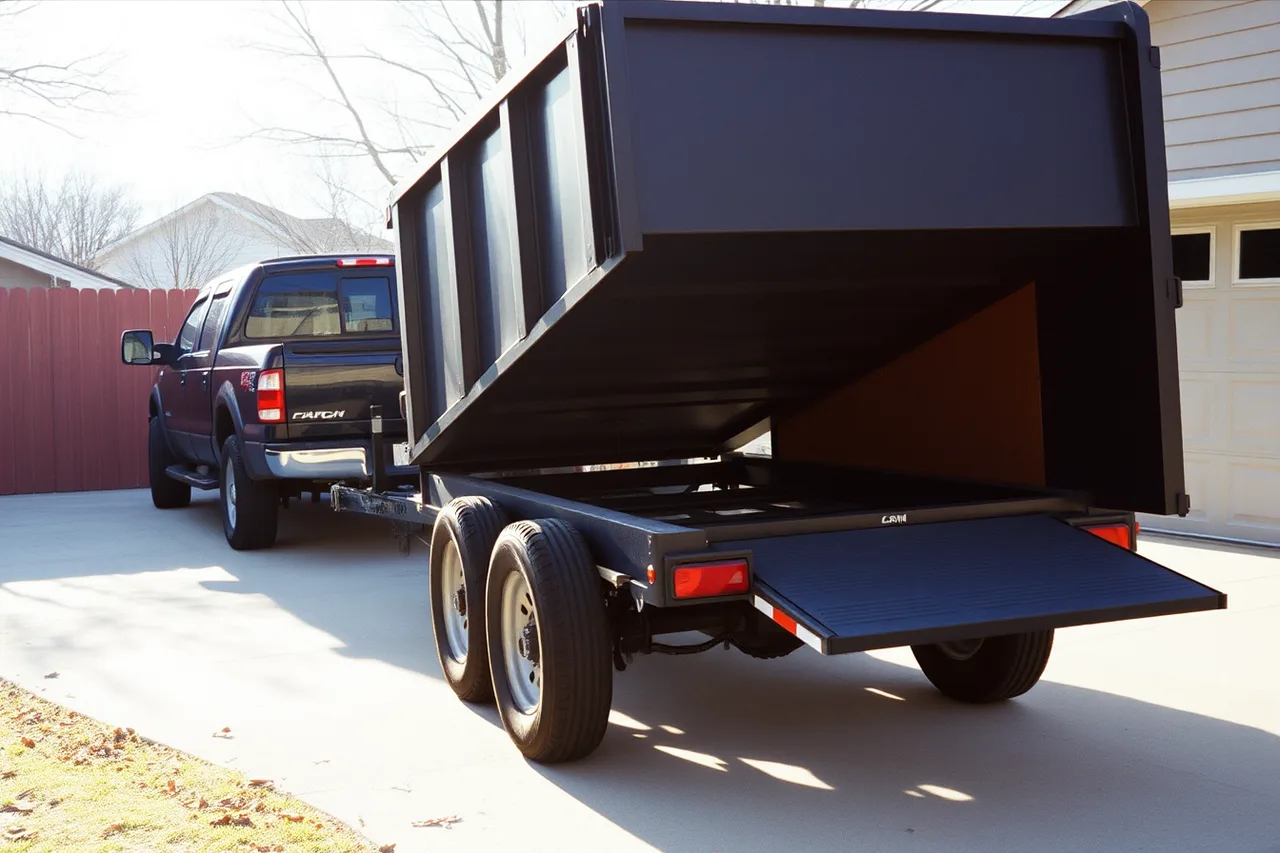
A used 12 to 14 foot box truck with a roll-up door and a walk ramp runs $18,000 to $35,000. The same size with a dump body and a winch runs $30,000 to $55,000 used. A new cabover with a dump body runs $65,000 to $95,000.
Add securement gear on day one: four ratchet straps, two moving blankets, a hand truck, an appliance dolly, and a mattress bag roll. That is $400 to $900, and it is not optional.
Confirm the license class your state motor vehicle department requires before you buy. A truck that cannot legally work is a parked asset.
Bucket two: the compliance stack
Registration, plates, and any haul-for-hire permit your state or city requires. Budget $300 to $1,200 for the first year in most US markets. Check the specific number with your state DMV.
Insurance is the bigger line. Commercial auto for a one-truck junk operation commonly quotes at $2,500 to $6,000 a year. General liability runs $1,000 to $3,000. Workers compensation, once you hire, adds a percentage of payroll that varies by state and classification code.
Get three quotes on identical limits so you compare the same product. A $1M/$2M limit is the common starting point. The full compliance sequence, including what varies by state, is in the licensing and compliance guide.
Business formation is small but real. An LLC filing runs $50 to $500 depending on state. A business bank account costs free to $25 a month. A dedicated phone line is $15 to $40 a month.
Bucket three: the working kit
This bucket is small, and it is where economizing costs the most. Floor runners, jamb guards, and door-frame protectors prevent the damage claim this trade actually produces. A full set runs $150 to $400.
Protective gear in the sizes your crew wears: gloves, safety glasses, back support belts, steel-toe boots. Budget $150 to $300 per person.
Small tools stop a job from stalling: a cordless drill, a pry bar, a utility knife, a headlamp, a shop vacuum. Budget $250 to $500.
Administrative setup belongs here too. Bookkeeping software runs $15 to $50 a month. A simple booking and routing tool runs $30 to $100 a month per user. The IRS guidance on starting a business covers entity choice and the obligations that attach.
Bucket four: the runway
Fixed costs continue whether or not a truck rolls: insurance, registration, loan payment, phone. Add software, fuel, and your own living costs.
Say your monthly fixed cost is F and your average job nets N after disposal and labor. You need F divided by N jobs a month just to break even. If F is $3,500 and N is $180, that is 20 jobs a month before you take a dollar home.
Decide how many months of F you can survive if revenue stays below plan, and treat those months as a startup cost. Most one-truck operations that close in year one close because the work arrived two months later than assumed, with nothing to live on in between.
The runway is also the bucket lenders will not fund. It has to come from savings or a line of credit drawn before you need it.
The funding options, compared
What it suits
- Own savings
- Any bucket, including runway
- Equipment finance
- The vehicle only
- Bank or credit union term loan
- Vehicle plus setup
- SBA 7(a) loan through a bank partner
- Vehicle, setup, some working capital
- SBA microloan through a local intermediary
- Smaller starts, gear, a modest vehicle
- Line of credit
- Runway and seasonal gaps
- Vendor or seller finance
- A specific used vehicle
What it costs
- Own savings
- No interest, all the risk
- Equipment finance
- Interest, vehicle as security
- Bank or credit union term loan
- Interest, usually a personal guarantee
- SBA 7(a) loan through a bank partner
- Variable rate set by the lender, capped by SBA rules
- SBA microloan through a local intermediary
- Fixed rate, often higher than a bank term loan
- Line of credit
- Interest on what you draw
- Vendor or seller finance
- Varies widely, read the terms
The trap
- Own savings
- Leaving yourself no reserve at all
- Equipment finance
- Payment continues through your slow season
- Bank or credit union term loan
- Approval depends on records you may not have yet
- SBA 7(a) loan through a bank partner
- Paperwork and collateral slow the timeline
- SBA microloan through a local intermediary
- Maximum is $50,000, and each intermediary sets its own rules
- Line of credit
- Easiest to misuse for things that are not temporary
- Vendor or seller finance
- Terms worse than they look on a monthly basis
A monthly payment is fixed and your revenue is not. Every financed line raises the number of loads per truck-day you have to hit before anything is yours.
Free help exists for choosing between them. The Small Business Administration's counseling and guidance pages point at local advisers who will look at your numbers at no charge.
The SBA's 7(a) program backs loans up to $5 million. Its microloan program tops out at $50,000 through local intermediaries, which suits a first trailer and a gear set.
Tipping fees and disposal: the recurring cost that surprises owners
Disposal is not a startup cost, but it moves on the facility's schedule rather than yours. Tipping fees run $60 to $120 a ton in most US markets, with $25 to $50 minimums on small loads.
A 10-yard dump trailer holds roughly 3 to 4 tons of mixed junk, so a full trailer is $180 to $480 in disposal alone.
Get the facility's published fee schedule before you build any model. It lists rate per ton, minimum load charge, stream-specific fees, and whether an account changes the terms. Then establish which materials you cannot take at all.
Paint and solvents, batteries, fluorescent tubes, and tires commonly go through separate programs. Appliances holding refrigerant, electronics, and anything wearing a hazard pictogram do too. The EPA's overview of products with corrosive, toxic, ignitable or reactive ingredients describes the categories. Your state environmental agency and the facility set the specifics.
What can wait
The second vehicle. Branded uniforms. A truck wrap before your phone number is stable. Software beyond what a spreadsheet is failing at. Any specialist capability for a service you have not been asked for twice.
Each of those consumes the runway, the bucket that keeps you alive. The startup order that avoids most of these mistakes is set out in the article on starting a junk removal business.
Turning this into a document
Every line in every bucket needs a source: a quoted vehicle, three insurance quotes, the facility's published schedule, and a fee confirmed by the issuing office. Undocumented figures are what makes a plan unusable.
The money section is the part lenders and partners read first. How the rest of the document is built around it: the article on what a junk removal business plan should include.
Once revenue starts and the first hire becomes possible, see the hiring and training guide. Whether your chosen market can carry any of it: the startup and market guide.
Common questions
How much does it cost to start a junk removal business?
A lean start with a dump trailer behind a truck you own runs $8,000 to $18,000 including insurance, gear, and three months of runway. A box truck start runs $25,000 to $50,000. Both figures are illustrative and depend on your market, your insurance quotes, and how much runway you need.
Can I start with almost nothing?
With a suitable vehicle you already own, the entry cost drops to insurance, registration, gear, and runway. That is still $5,000 to $12,000 in most US markets. The truck is financeable; the runway usually is not.
Should I finance the truck or buy outright?
Outright leaves you with no fixed payment through a slow season. Financing preserves cash for the runway. Which matters more depends on how many months of fixed cost you have in reserve.
What is the most common budgeting mistake?
Spending the runway on equipment. The truck earns nothing during the weeks before the phone starts ringing, and the fixed costs do not pause while you wait.