Guides
Standard procedures for a junk removal business, from open to close
A junk removal daily SOP checklist in four blocks: yard start, arrival, load out, and the scale run, with the stop conditions a crew must not pass.
What to take away
- This is a working checklist, not a policy. It is written to be printed, carried on the truck and ticked.
- Four blocksbefore the truck leaves, on arrival, during load out, and at the facility. Each has one stop condition that outranks the schedule.
- The stop conditions exist because the alternative is a crew making a judgment call under time pressure with a customer watching.
- Adapt the wording to your own operation. Do not adapt the stop conditions.
Block one: before the truck leaves the yard
- Truck fuel, tires and lights checked, and the walk-around signed off by name.
- Straps, tarps and load bars on board and serviceable.
- Dollies, hand tools, floor protection and door jamb guards loaded.
- Gloves, boots, eye protection and dust masks for every person on the crew.
- Printed refusal list on the truck, current version.
- Facility hours and last accepted load time confirmed for today.
- Route reviewed, with access notes read out loud for each stop.
- Payment method and any purchase order number confirmed for commercial stops.
Stop condition. If securement gear is missing or damaged, the truck does not roll. The general performance expectations for keeping a load on a vehicle, including the provisions for roll-off and hook-lift containers, are summarized by the Federal Motor Carrier Safety Administration in its cargo securement rules, and which of them apply to your vehicle and operation is a question for that agency and your state.
Block two: on arrival
- Park where the truck is legal and the carry is shortest, in that order.
- Greet the customer and confirm who is authorized to approve changes.
- Walk the full route from item to truck before touching anything.
- Count the two-person items and the disassembly items out loud.
- Photograph the pile, the route, and any pre-existing damage on walls, floors and door frames.
- Restate the price, what is included, and what is excluded.
- Get a clear yes on the total before anything moves.
- Lay floor protection and jamb guards on the carry route.
Stop condition. If the pile is materially larger than booked, or the route is different from what was described, the crew stops and re-prices before loading. The sequence for doing that without losing the job is set out in the article on scheduling jobs without delays for the calendar side and in the crew's own change rule for the price side.
Block three: during load out
- Carry, do not drag. Anything too heavy to carry gets a dolly or a second person.
- Two people on anything above the agreed single-person limit, without exception.
- Anything questionable goes to the refusal list before it goes on the truck.
- Donation and recycling sorted at the truck, into their own space, not mixed and separated later.
- Load built low and even, heavy items forward and secured as the load grows.
- Customer consulted before removing anything attached to the building.
- Area swept and the finished space walked with the customer.
- After photographs taken, including the floor.
Stop condition. Nothing on the refusal list goes on the truck, whatever the customer says. Paint, solvents, batteries, tires, appliances holding refrigerant, electronics and anything wearing a hazard pictogram are commonly handled through separate programs, described in general terms by the EPA's overview of household hazardous waste. Your state environmental agency and the receiving facility set the specifics, and the crew's job is to follow the printed list rather than to interpret it.
Block four: the scale run
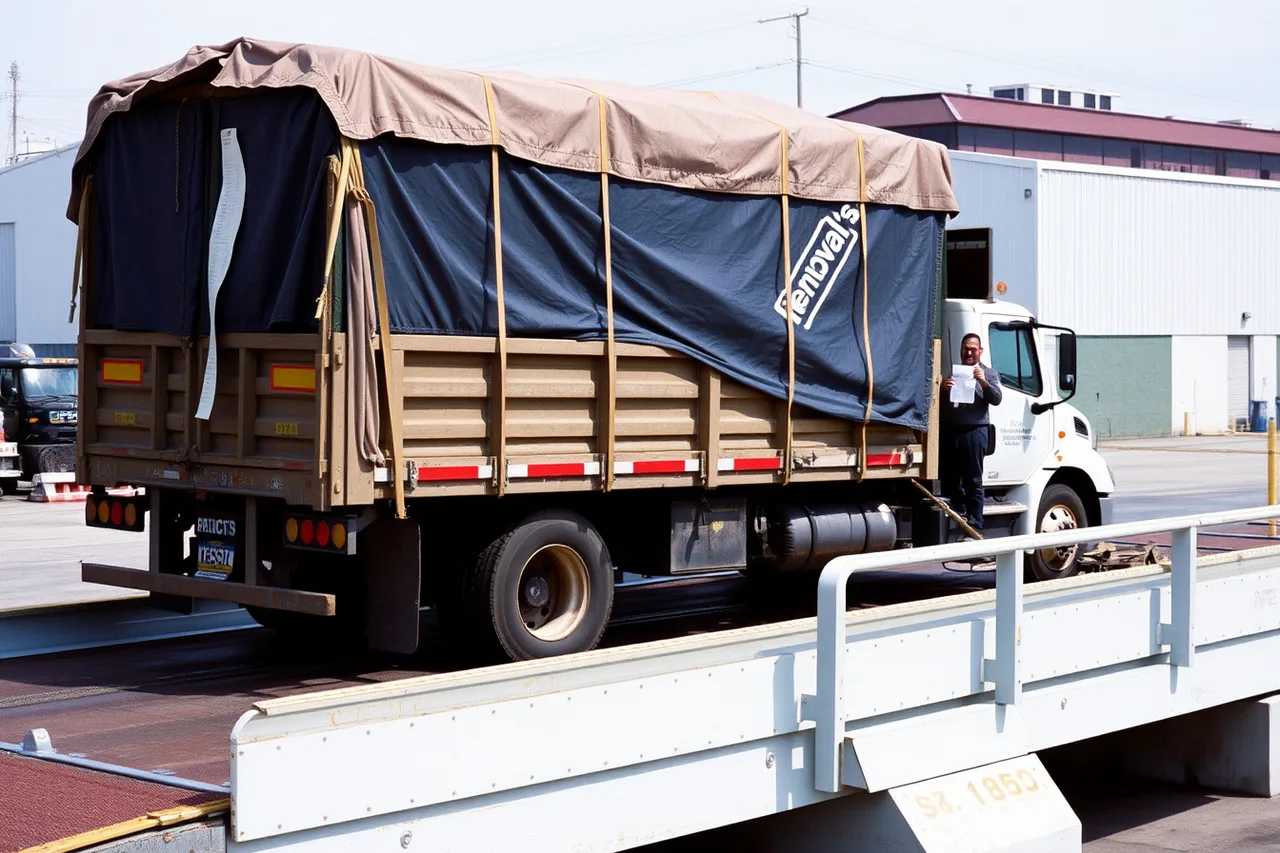
- Load secured and tarped before leaving the property.
- Diversion stops made first, while the sorted material is still accessible.
- Scale ticket collected and photographed.
- Weight, stream and any minimum charge recorded against the job, not against the day.
- Truck swept out and gear re-stowed before the next stop.
- Crew clock closed with arrival and departure times per job, not a single daily total.
Stop condition. No load leaves a property unsecured, even for a short move. This is the item crews skip when they are behind, which is exactly when it matters.
The end-of-day handback
Five minutes at the yard, every day, with no exceptions on busy days.
- Photographs and tickets uploaded against each job.
- Any damage, near miss or customer complaint reported the same day, in writing.
- Items held back for donation logged with where they are going.
- Gear shortages and truck faults reported for tomorrow's start.
- Tomorrow's access notes read before anyone leaves.
This block exists because the office cannot compare quoted against actual without it, and without that comparison nothing about your pricing improves. Those records also serve a tax file, and the IRS sets out what a business is expected to keep.
Keeping the document alive
A checklist rots quickly. Three habits keep it useful.
Date and version it, so a crew can tell whether the sheet on the truck is current. Change it when a job goes wrong rather than at a review cycle, and say in one line what event caused the change. And keep it to one page each side, because a checklist nobody finishes is a checklist that measures nothing.
The equipment named in block one comes from decisions made once, and the equipment and setup guide explains what is actually load bearing there. Teaching a new hire to work the sheet is part of onboarding rather than a first-day handout, covered in the hiring and training guide.
Where the whole loop sits, from booking to facility, is set out in the operations and workflow guide, and building a crew who will actually run it is in the article on hiring reliable staff.
Common questions
Should the checklist be on paper or on a phone?
Whichever gets ticked. Paper survives a dead battery and a wet morning. A phone puts the photographs and the ticks in the same place. Either beats a checklist that lives in the office.
Do experienced crews still need it?
The stop conditions, yes. Experienced crews skip steps under time pressure exactly like everyone else, and the stop conditions are the steps whose absence is expensive.
What if a customer objects to the refusal list?
Explain what happens to a refused load at the gate, and offer to tell them who does take that material locally. The answer is never to take it anyway.
How long should this take to run?
The yard block a few minutes, the arrival block the length of the walk-around you were going to do anyway. If it feels like overhead, the sheet is too long.
Who owns the document?
One named person, who changes it. A checklist that anybody can edit becomes a checklist nobody trusts.