Guides
Junk removal e-waste recycling in BC: fees, depots, and legal duties
Junk removal e-waste recycling BC rules cover approved depots, tracking, and legal duties. Haulers must follow EPRA BC requirements or face refusal and penalties.
What to take away
- Junk removal e-waste recycling BC runs province-wide through EPRA BC under the Recycling Regulation.
- Approved drop-offs are freeno depot tipping fee applies to regulated electronics.
- The money moves upstream as environmental handling fees, typically a few dollars to about $40 an item at retail.
- Named drop-offs include London Drugs, Best Buy, Staples Canada, Return-It depots, and listed municipal sites.
- Haulers keep a manifest, a plate record, and a signed receipt for at least two years, or the load gets refused.
Who has jurisdiction over BC e-waste and where it goes
BC's Recycling Regulation, part of the Environmental Management Act, makes e-waste a province-wide extended producer responsibility program. Electronics entered the regulation in 2007. EPRA BC operates the program as Recycle My Electronics, sets drop-off locations, and tracks volumes through approved depots.
Who Regulates BC E-Waste
Province / EPRA BC
- Sets program
- Yes
- Approves depots
- Yes
- Bans landfill
- Yes
- Local rules
- Province-wide
Municipalities
- Sets program
- No
- Approves depots
- No
- Bans landfill
- Cannot permit
- Local rules
- Bulky items
Private Depots
- Sets program
- No
- Approves depots
- Own intake
- Bans landfill
- Must refuse
- Local rules
- Hours/forms
City governments may add local rules for bulky item collection, but they cannot permit landfilling of regulated e-waste. Depot operators set their own intake forms and hours. The structure replaces the state-by-state patchwork common in the United States.
Canada's federal waste management framework leaves those operating rules to the provincial program. A separate article explains how provincial disposal bans change a junk load.
Approved drop-offs range from retail counters to regional transfer stations. London Drugs stores take small electronics at the service desk. Best Buy and Staples Canada stores in BC host electronics drop-off bins. Many Return-It bottle depots accept listed electronics.
Municipal and regional sites handle the larger loads. The City of Vancouver's Zero Waste Centre, Metro Vancouver's Coquitlam and North Shore transfer stations, and other listed sites take regulated electronics.
The Recycle My Electronics BC depot finder carries current hours, addresses, and accepted items. Hartland Landfill near Victoria turns electronics away at the tipping face.
What triggers a hauler's duty
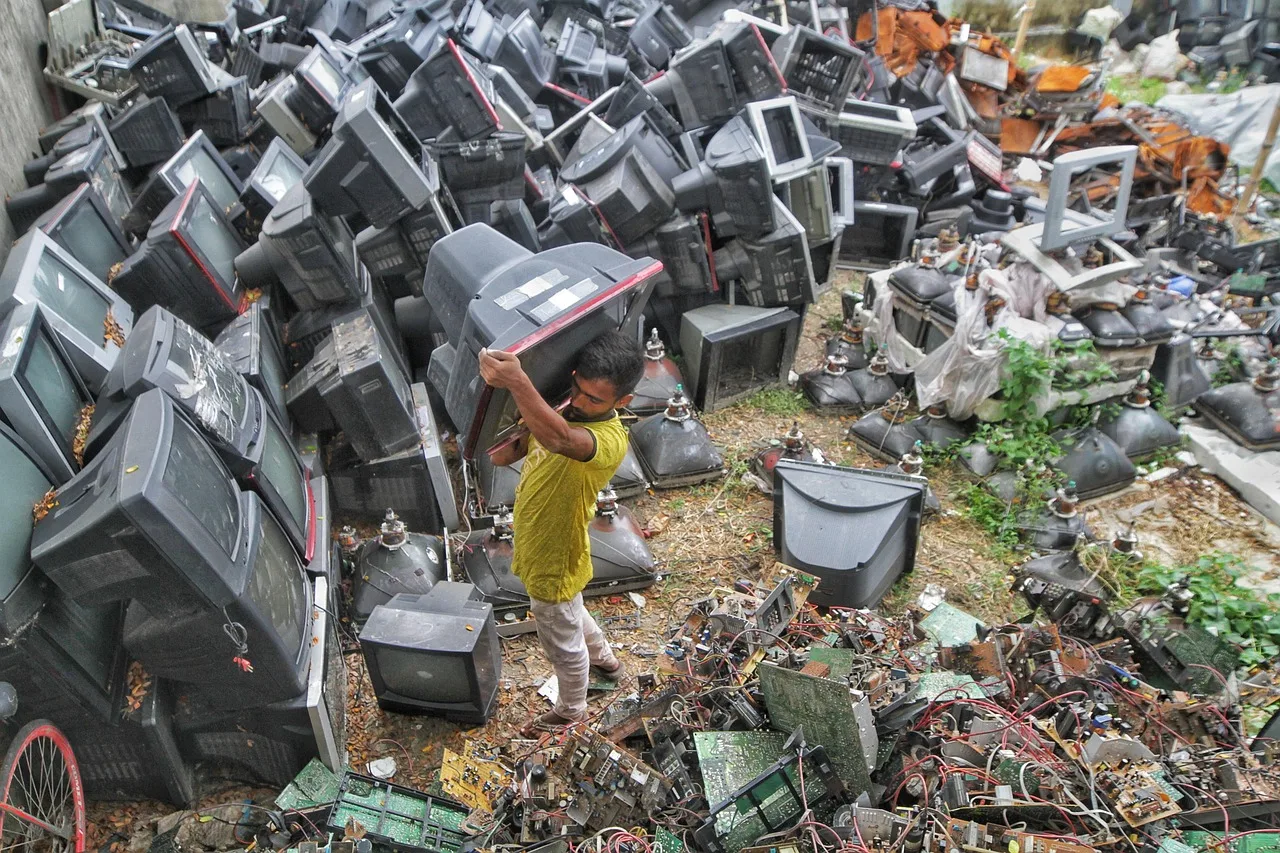
A junk removal crew has a duty the moment it takes away an item covered by the BC regulation. Covered items include televisions, computers, monitors, printers, and audio equipment.
It does not matter whether the customer calls it junk or scrap. If the crew loads the item, the crew is the hauler.
Electronics are among the fastest growing waste categories, which is why BC banned them from disposal.
What documents to submit
E-waste movement is tracked, so a hauler cannot drop items without paperwork. An application for an account at an approved depot usually needs the records below.
Depot Account Paperwork
- Business licence
- Vehicle registration
- Collection manifest
- Weigh or count receipt
- Commercial auto insurance (sometimes)
| Document or record | Why the hauler needs it |
|---|---|
| Business licence | Proves legal operation when depot staff ask |
| Vehicle registration | Confirms the plate on the drop-off record |
| Collection manifest | Names the generator, hauler, and approved depot |
| Weigh or count receipt | Creates a traceable disposal record |
| Commercial auto insurance | Some depots ask for proof before opening an account |
The manifest should list the collection address, the item count, and a signed depot acknowledgment. Keep the receipts at least two years.
The province can request these records in a compliance audit. Some depots ask for a copy of the hauler's commercial auto insurance before opening an account.
For quoting a job with any surcharges, see GST/HST, tipping fees and how to quote.
How long approval takes and what e-waste fees cost
Approval for a new hauler account at an EPRA BC-approved depot typically takes one to three business days. Staff may verify the business licence and vehicle registration before the first drop-off.
At the depot, a standard drop-off takes ten to twenty minutes when the manifest is complete. Incomplete paperwork can add a day.
First E-Waste Drop-Off
- 1-3 business daysAccount approval
- Visit 1Set up account
- Visit 2Drop the load
- 10-20 minutesStandard drop-off
Plan two visits on the first run: one to set up the account, and one to drop the load. Regulated e-waste carries no provincial fee at an approved depot.
Environmental handling fees are charged when an item is first sold at retail. In BC the fee typically runs from about $2 for a computer to $40 for a large television. Monitors and printers usually fall between $5 and $15. The fee appears as a receipt line and funds the program.
For bulkier items outside the electronics stream, municipal bulky-item bylaws compared explain local collection differences.
What happens if you skip it
A landfill or transfer station operator who is not an approved depot must refuse a load of covered e-waste. Staff record the plate and notify the province. The hauler then has to retrieve the items and deliver them to an approved depot.
The ministry can also issue an administrative penalty under the Environmental Management Act. Administrative penalties for waste violations are published by the province and typically run from the low thousands of dollars. A repeat offense can bring a compliance order with a written plan.
Crews on Vancouver Island should also review Victoria tipping fees and reuse routing for local disposal realities.
Example: a Vancouver condo move-out
A crew removes a television, two monitors, and a printer from a downtown condo. The e-waste is regulated, so the crew logs the address and completes a manifest.
The load goes to a listed drop-off, such as a Best Buy store or the City of Vancouver's Zero Waste Centre. The depot weighs or counts the items and stamps the receipt, and the crew keeps that receipt on file.
No landfill tipping fee applies because the items never reach a landfill. That is the plain legal path for junk removal e-waste recycling BC.