Guides
How BC disposal bans split a junk removal load
Mattresses, electronics, yard waste and paint are kept out of BC disposal sites, so a junk removal load needs sorting, extra depots and a price to match.
What to take away
- A junk removal load in Metro Vancouver that holds a mattress, a television and green waste is three or four stops, not one tip.
- Mattresses, electronics and clean yard waste each have a separate destination and a separate fee.
- Producer-funded drop-offs such as Return-It, Recycle My Electronics and Product Care Recycling are often free, but each program has its own accepted list, hours and per-visit limit.
- Sorting happens at the property. Sorting at the scale costs a queue, a surcharge and a second trip.
- Price the disposal path, not the truck volume. A flat per-load quote absorbs the extra two hours.
How a BC disposal ban changes a load
A disposal ban stops a material from entering a landfill or incinerator. In British Columbia the framework is provincial law: the Environmental Management Act, with the Recycling Regulation setting producer-funded collection for products such as tires, electronics, paint, batteries and beverage containers, and the Organic Matter Recycling Regulation setting the handling rules for compost and organic matter. Regional districts enforce disposal bans at the facilities they own, so a load that passes at one gate can be refused at the next.
The effect on a hauling day is physical. The load you picked up as one job becomes two or three streams before it reaches a scale. A banned item found in a general load gets refused, surcharged, or pulled out on the tipping floor while your crew waits.
Facility rules are not identical across the province. Garbage - Province of British Columbia explains how bans and garbage rules shape what a site will accept. Metro Vancouver layers its own disposal bans on top of the provincial list through its Solid Waste Management Plan, so a crew working Surrey, Burnaby and Richmond needs the depot sheet for each before the truck leaves the yard.
Metro Vancouver is not the only district with a list. The Capital Regional District, the Fraser Valley Regional District and the Regional District of Nanaimo each run their own facilities and set their own accepted-material rules, and several districts publish disposal bans of their own. A crew that crosses a district boundary carries two lists, because what is banned on one side of the line is often ordinary garbage on the other.
The cheapest place to catch a banned item is the curb. A two-minute walk-through at pickup beats a two-hour round trip to a depot that will not take the load.
The three bans that hit residential crews hardest
Mattresses, electronics and yard waste account for most refusals on residential work. They share nothing else. Each has its own destination, fee and handling routine, and treating them as one category is what turns a priced job into a break-even one.
Mattresses are bulky, light and awkward. Metro Vancouver's disposal ban keeps mattresses and box springs out of the general waste stream, so they go to a mattress recycler that strips steel, foam and fibre. Metro Vancouver lists the sites that accept them under its disposal ban, and that list is worth a look before the truck is loaded.
A queen set eats truck volume and adds almost no weight, so the cost sits in space and handling rather than tonnage.
Keep them dry and away from wet waste, because a soaked mattress is a contaminated one.
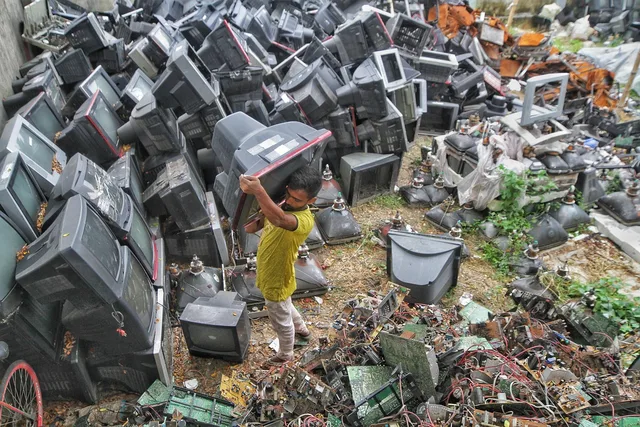
Electronics are the second stream. Televisions, monitors, computers and small appliances move through producer-funded recycling, and in BC the drop-off network for televisions, computers and printers is listed under the Recycle My Electronics program. Never crush them into a mixed load: a broken screen or a punctured battery cell contaminates everything around it. Bag small items and keep them in a tote that does not get sat on.
Yard waste is the third, and the word that matters is clean. Branches mixed with treated lumber, bagged garbage or plastic are no longer yard waste. They are contaminated waste, and the compost facility can refuse the whole load.
Producer-funded drop-offs and reuse routing
Extended producer responsibility moves the cost of recycling onto the manufacturers and retailers who put the product on the market.
For a hauling crew the upside is concrete: a mattress, a television or a can of paint may have a funded drop-off that costs less than a general tip fee. Recycling: Extended Producer Responsibility - Province of British Columbia lists how the province runs those programs.
The catch is that funded drop-offs come with their own conditions. Accepted product lists change, drop-off hours are often shorter than a transfer station's, and some sites cap how many units one vehicle can bring in a day. A crew that knows the list can run two or three free stops and cut disposal cost on the same load.
The programs to know by name are Return-It for beverage containers, Recycle My Electronics for televisions and computers, Product Care Recycling for paint, solvents and flammable liquids, and Call2Recycle for household batteries.
Reuse comes before any depot. Working appliances, solid furniture and clean building materials often have a second life through a charity or a reuse centre, and that route is usually cheaper than tipping. It also gives you a straight answer when a customer asks where their sofa went.
Route decisions belong in the truck, not the office. A driver with a current depot list can pick the best path in minutes, which is where the junk removal operations and workflow guide for owners puts the real money in a hauling day.
Keep the receipts. Some programs want proof of drop-off or a registered account, and a logged date and facility name answers a customer question without a phone call.
Sorting a mixed load at the property
Sort at the property, because that is where you have space, daylight and the customer standing next to you. The scale gives you a queue and a surcharge instead. Crews should build streams as they carry items out, not after everything is already in the truck.
The streams for a BC load are the following:
- general waste
- mattresses
- electronics
- yard waste
- recyclables
- hazardous material
- reusable goods Most jobs touch three or four of them. Labelled totes or a divider system keep the streams apart in transit, and a divided truck is faster to unload at each stop.
The sequence below is the one to drill:
- Walk the property and flag banned or special items before lifting anything.
- Set out labelled zonesgeneral, mattress, electronics, yard waste, hazardous.
- Pull hazardous items first into a sealed tote.
- Set reusable goods aside for donation or resale.
- Load general waste and recyclables into separate truck sections.
- Lay mattresses flat and dry, away from wet waste.
- Confirm the depot order and the load plan before pulling out.
Hazardous material is the part that stops a crew cold. Paint, solvents, batteries, propane tanks and fluorescent tubes are not general junk. Business-generated hazardous waste falls under the Environmental Management Act and its Hazardous Waste Regulation, while household amounts go to producer-funded depots such as Product Care Recycling for paint and solvents and Call2Recycle for batteries, or to a municipal or regional household hazardous waste depot or collection day.
Mixing a propane tank into a general load creates a safety and compliance problem at the same time.
Price hazardous items as a separate task and route them to a household hazardous waste depot or a producer-funded collection site.
Organics are the quieter trap. Food waste, yard trimmings and soiled paper are organic matter under BC's Organic Matter Recycling Regulation, explained at Food and organic waste - Province of British Columbia. A fridge full of spoiled food is not general junk. Empty it, route the food as organic waste, then send the clean shell to appliance or metal recycling.
Depot order, weight minimums and the clock
Every extra kilometre and every extra stop comes straight out of margin. A BC job should run property first, then the fewest depots in a sensible order, then the yard.
Hazardous and organic facilities often close early, so they go first. Mattresses and electronics next.
General waste last, because it is the load most likely to be consolidated with another job.
Distance is not the same as cost. A depot five minutes closer with a higher minimum charge can cost more than the one further out. Build a depot sheet for your service area with a column each for material, fee, hours and restrictions, and update it when fees move. The Recycling Council of British Columbia's Recyclepedia is the fastest way to confirm which site takes which material before that sheet is written.
Weight minimums bite on light loads. Many facilities charge by tonne with a floor, so a truck full of furniture and cardboard can hit the minimum and cost more per item than the customer expects.
Consolidating general waste across two jobs helps, but only if the routing still makes sense. Do not cross the region to save a small fee.
Time of day changes the price too. The same scale that clears a truck at 7 a.m. can hold a queue at 11 a.m.
A 30-minute delay at one stop pushes the whole day and turns a nine-hour shift into overtime.
The junk removal SOP checklist for daily operations should carry a route review before the truck leaves: depot order, fees, load plan, five minutes.
Pricing the disposal path, not the truck
Start with the path. List every material in the load, give each one a destination and a cost, then add labour, truck time, fuel and margin. That total is the price. A flat per-load number without this work is a guess, and guesses lose money the moment a banned item appears.
Build the cost in named terms you can substitute with your own figures. For each stream, take the disposal fee, the handling minutes and the drive time to that depot.
Mattresses add a per-unit fee and handling time. Electronics add a stop. Yard waste adds volume and a compost fee.
Hazardous material adds a facility trip and sometimes a per-kilogram charge. General waste adds weight-based tipping.
Labour is the line most often missed. Sorting a mixed load at the property adds time on site. A second depot stop adds travel, a queue and unloading. If the hourly rate does not cover those minutes, the job is underpriced. Put the time in the quote and explain it as part of the service.
Show surcharges on the invoice. A mattress fee, an electronics fee and a yard-waste fee read as fair when the customer can see why they exist.
Hidden surcharges produce disputes and callbacks, and they leave you exposed when a customer adds a banned item as the truck is being loaded.
The price of junk removal services has to be built from the real disposal path.
Some jobs are not worth taking. A load that is mostly hazardous material or contaminated organics carries high cost and high risk, and the most profitable junk removal services in 2027 are the ones with a clear path and a price that covers it. If a job cannot be priced to cover its path, decline it or renegotiate.
Compliance sits inside the price, not beside it. Tipping banned material illegally risks fines and can cost you access to a facility, and junk removal licensing and compliance requirements set out the permits and obligations that apply to BC haulers.
Confirm current requirements with the provincial and municipal bodies that issue them, and take contract and classification questions to a lawyer or accountant.
A worked load plan for a Burnaby apartment clear-out
A two-bedroom apartment in Burnaby, cleared on a weekday. The load includes a queen mattress and box spring, a 55-inch television, and a desktop computer. It also includes two bags of balcony trimmings and a broken office chair. The load also has six boxes of general clutter, a half-full paint can, and a small barbecue propane tank.
Identify first. The mattress, box spring, television and computer are banned from general waste. The paint and propane are hazardous. The trimmings are organic. The chair and boxes are general waste, and the chair frame may be scrap metal.
Sort on site. Mattress and box spring go flat in a dry section. Television and computer go in the electronics tote. Trimmings go in a green bag. Paint and propane get sealed in a hazardous tote. Chair and boxes load as general waste.
Then route it:
| Stop | Material | Handling |
|---|---|---|
| Household hazardous waste facility | Paint, propane | Sealed, upright, separate |
| Mattress recycler | Mattress, box spring | Dry, per-unit fee |
| Electronics drop-off | Television, computer | Producer-funded, check limits |
| Compost facility | Balcony trimmings | Clean green only |
| Transfer station or scrap bin | Chair, general boxes | Weight-based tipping |
Estimate the time. Hazardous drop-off, mattress recycler, electronics drop-off and compost each add a stop plus travel. Against a single tip, the extra routing and handling on this load runs to roughly two hours, and that is before any queue.
At each stop the material goes to its own program: electronics to a Recycle My Electronics drop-off, paint and propane to a household hazardous waste depot, balcony trimmings to a composting facility, the mattress and box spring to a mattress recycler, and the chair and boxes out as general waste.
Price it. Base labour for loading and travel, plus each depot fee, plus the added routing time, plus margin. If the original quote assumed one tip, the added time has to be added or the job runs at a loss. Show the mattress, electronics, yard waste and hazardous handling as separate lines.
The lesson is that the ban list writes the plan. A crew that knows the list sorts in twenty minutes and routes clean. A crew that does not finds out at the scale, with a full truck and a customer waiting on a price that no longer works.
Common questions
Can a mattress go in a general waste bin in Metro Vancouver?
No. Metro Vancouver bans mattresses from general waste, so they go to a mattress recycler or a designated drop-off. One mixed into a general load risks a refusal or a surcharge, and the crew pays for the trip either way.
Are electronics always free to recycle in BC?
Many are covered by producer-funded programs such as Recycle My Electronics, so drop-off is free or low cost for the listed products. Some items and some facilities still charge, and per-visit limits vary. Check the accepted list and the site's hours before you route a load.
How should a crew handle a fridge full of food?
Empty and clean it first. The food is organic waste and needs its own destination under BC organics rules. The clean shell can then go to appliance or metal recycling as a separate stream.
Does a propane tank ride in the general junk load?
No. Propane tanks are hazardous waste and go to a household hazardous waste facility. Keep them sealed, upright and away from general waste, and price the trip as its own task.